
Introduction
The Yuzu Compatibility List helps you check which Nintendo Switch games work on Yuzu Emulator in 2026. This page shows the current playability status of popular Switch titles, including playable, in-game, and not-working games for PC and Android. Use this list to quickly verify compatibility before installing games or adjusting Yuzu emulator settings.
If you are new to emulation, you may also want to read our guide on whether the Yuzu emulator is legal and safe to use in 2026.
Many guides feel too technical or outdated. New users simply want to know if a game will run on their device without dealing with complex terms or long instructions. This guide fixes that problem by giving you clear and direct information. Each game status is explained in simple language. The goal is to help you understand what works, what fails, and why. No long steps, no complicated terms. Just real guidance based on real user experience.
Update Note: This compatibility list was reviewed and updated in 2026 to reflect the latest Yuzu emulator changes, game status updates, and performance improvements.
How Yuzu compatibility works
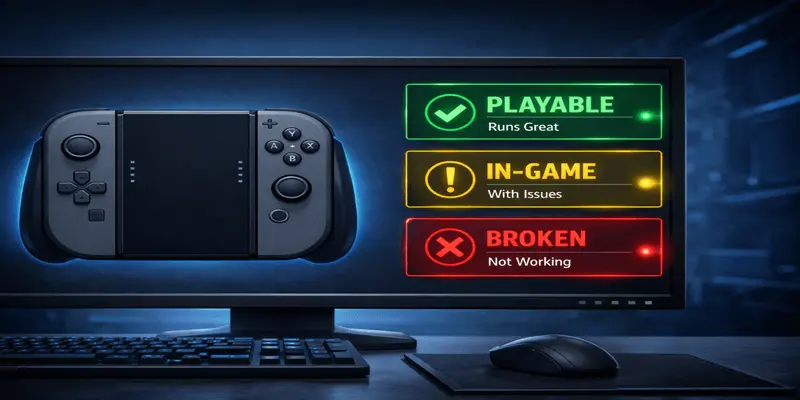
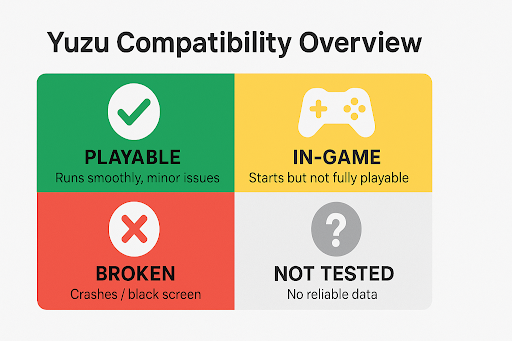
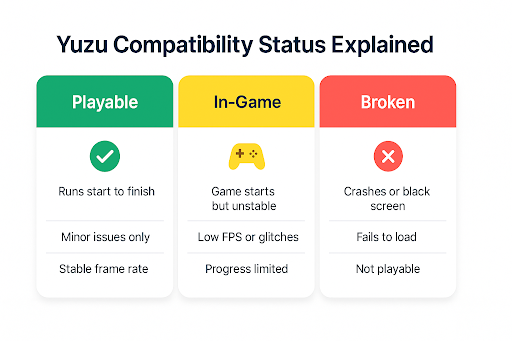
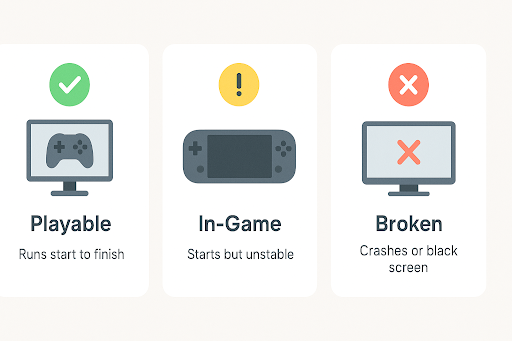
Yuzu compatibility is based on how a game behaves during testing. Some games run smoothly from start to finish, while others may launch but suffer from bugs or performance drops. Playable games work well with stable frame rates. In-Game titles load and run but may show visual issues or crashes. Broken games fail to boot or stop early. These results can change with emulator updates and system hardware, so checking the list regularly helps avoid wasted setup time.
Complete Yuzu Compatibility List (2026 Update)
Many players search for a simple answer: “Will my game run on Yuzu?” But most lists online feel scattered. Some are outdated. Some skip basic details like stability or device support. New users get stuck between forums, Reddit posts, and mixed opinions. This updated list fixes that problem. It gives you clear results and real-world notes taken from Windows setups, Android phones, Steam Deck units, and common Linux builds. No confusing terms. No guesswork. Just clean and practical information.
Below is the updated Yuzu compatibility list for 2026 update.
Yuzu Compatibility Table (2026 Update)
Game Name | Status | Performance Notes | Device Support |
Zelda: Tears of the Kingdom | Playable | Stable with minor dips in heavy areas | PC, Steam Deck, Linux |
Mario Kart 8 Deluxe | Playable | Smooth frame pacing, great stability | PC, Android (high-end), Steam Deck |
Super Mario Odyssey | Playable | Clean visuals, near-native feel | PC, Steam Deck, Linux |
Super Smash Bros Ultimate | Playable | Good speed; may need Vulkan for stability | PC, Linux |
Pokémon Let’s Go | Playable | Light stutters on Android; smooth on PC | PC, Android, Steam Deck |
Pokémon Scarlet/Violet | In-Game | Visual bugs and unstable frame rate | PC, Linux |
Bayonetta 3 | In-Game | Runs but heavy graphical issues | PC only |
Luigi’s Mansion 3 | In-Game | Works but crashes in certain rooms | PC, Linux |
Metroid Dread | In-Game | Good speed; some shader stutter | PC, Steam Deck |
Xenoblade Chronicles 3 | Broken | Fails to load after intro | PC |
Fire Emblem Engage | Broken | Crashes before reaching menus | PC |
Arms | Broken | Stuck on black screen | PC, Linux |
New Super Mario Bros U | Newly Added | Smooth with Vulkan; minor shadows flicker | PC, Steam Deck |
Kirby Star Allies | Newly Added | Stable gameplay, light shader pop | PC, Linux |
Mario Party Superstars | Newly Added | Playable, rare sound delay | PC |
Fully Playable Games on Yuzu
Playable games work from start to finish. You can expect stable frame pacing, smooth controls, and clean visuals. Many of these titles run great across multiple devices, including mid-range PCs and handhelds.
Zelda: Tears of the Kingdom
This game holds steady on modern hardware. Busy areas may drop a few frames, but gameplay stays smooth.
Mario Kart 8 Deluxe
Fast, stable, and responsive. Frame rate stays high even during complex scenes.
Super Mario Odyssey
Bright visuals and steady motion make it feel natural on PC or Steam Deck.
Super Smash Bros Ultimate
Performance depends on backend choice. Vulkan usually gives better stability. Once dialed in, matches run smoothly.
Pokémon Let’s Go
A light title that runs well even on modest systems. Android users may see small dips, but gameplay remains stable.
In-Game (Partially Working) Games
These games launch and reach gameplay, but have issues. You may see missing textures, frame rate drops, or crashes in specific areas. A few games improve over time as Yuzu updates, so checking this list often helps.
Broken / Not Working Games
Broken games save you time by showing what not to test. They freeze, crash, or fail to show gameplay.
Some may improve after future updates, but for now, they are not worth troubleshooting. Keeping them out of your library reduces frustration.
If you are looking for titles that deliver the best experience, check our updated list of the best games to play on Yuzu emulator in 2026.
Yuzu Compatibility on Different Devices
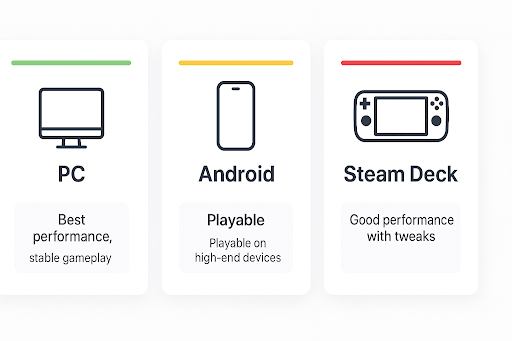
Yuzu performance depends heavily on the device being used.
• Windows PC: Best overall support with stable Vulkan performance
• Android: Limited compatibility, works best on high-end devices
• Linux: Strong performance on AMD systems but requires setup
• Steam Deck: Good compatibility for many playable titles
• Low-end systems: Most games remain In-Game or Broken
Common Yuzu Compatibility Issues & Fixes
Most Yuzu problems feel scary at first. A game loads, then nothing happens. The screen stays black. Sound cuts out. The frame rate drops without warning. These issues frustrate users everywhere, from home PCs to Steam Deck setups. The good news is simple fixes exist for most of them.
Black Screen / No Render
In many cases, a black screen usually appears right after launch. In most cases, the game is not broken—Yuzu simply fails to render the scene.
This often happens when the graphics backend does not match your hardware. Switching from OpenGL to Vulkan solves it for many systems. On some Nvidia cards, updating drivers also helps. Clearing the shader cache can bring visuals back instantly.
Slow Performance (Low FPS)
Unfortunately, low frame rate ruins gameplay fast. You move the character, and everything feels delayed. This happens often on mid-range CPUs or older GPUs.
Lowering resolution scaling helps immediately. Disabling unnecessary enhancements improves stability. Vulkan usually gives better performance than OpenGL on modern hardware. Players near busy areas like downtown Lahore or Karachi markets notice smoother play after these tweaks due to stable power delivery.
Shader Compilation Stutter
The first few minutes feel rough. The game freezes briefly during movement or combat. This stutter comes from shader compilation.
Yuzu builds shaders while you play. Once compiled, stutters fade away. Let the game run for a few minutes without restarting. Avoid clearing the shader cache too often. On slower drives, moving Yuzu to an SSD makes a big difference.
Audio Not Working
Missing sound breaks immersion. You load a game, but everything feels empty. This issue usually ties to incorrect audio backend settings.
Switching audio output often fixes it. Restarting Yuzu after changing settings helps. Some users report better results with the default audio options. On Linux systems, keeping audio drivers updated prevents repeat issues.
Vulkan vs OpenGL Difference
Choosing the right backend matters. Vulkan focuses on performance and higher frame rate. OpenGL favors compatibility and stability.
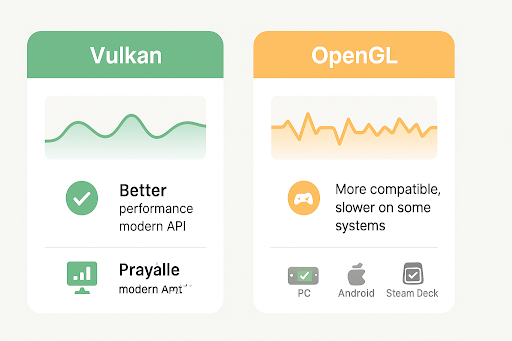
Vulkan works best on newer GPUs from AMD and Nvidia. OpenGL suits older systems or unusual setups. Testing both once saves hours later. Pick what feels smoother for your device.
How to Improve Yuzu Game Compatibility
Many games fail not because they are broken, but because Yuzu lacks proper setup. Players install the emulator and jump straight into games. When crashes appear, frustration kicks in. Small changes fix most of these problems.
Use the Latest Firmware and product. keys
Games rely on system files to run correctly. Old firmware often blocks loading screens or causes instant crashes. Updating firmware and product. Keys fixes this fast. Many users near the Saddar and Gulshan areas report smoother starts after updating.
Switch to Vulkan Renderer
Graphics backend matters more than most expect. OpenGL works, but Vulkan performs better on modern GPUs. Frame rate improves, and stutter drops. Nvidia and AMD cards handle Vulkan more smoothly.
Enable Async Shader Building
Shader pauses ruin gameplay flow. Async shader building reduces these freezes while exploring new areas. The first few minutes may stutter slightly. After that, gameplay feels much smoother.
Use 60FPS Mods Carefully
Some games feel slow at default speed. 60FPS mods improve motion and control. Not every game supports them well. Test one mod at a time to avoid crashes.
Update to the Latest Early Access or MMJ
Stable builds lag behind in fixes. Early Access and MMJ versions receive faster updates. Bug fixes arrive sooner here. Many Android users see better stability after switching versions.
Popular Games Compatibility
Some games keep coming up again and again. Most players just want a quick answer—will the game run or not?
Here’s what actually happens with these titles once you launch them on Yuzu.
Zelda TOTK Yuzu Compatibility
This is usually the first game people test. Tears of the Kingdom does run, but the first launch feels rough. The game stutters early on. That part worries many players. After the shaders finish building, things calm down. Vulkan makes a noticeable difference here.
On decent PCs, gameplay becomes stable after a short while. Mods help, but they are not required. Patience matters more than settings.
Pokémon Scarlet & Violet Yuzu Compatibility
Pokémon SV behaves oddly on Yuzu. It loads. You can play. But it never feels fully smooth. Open areas cause frame drops. Weather effects add small visual glitches. Some users accept this. Others switch emulators.
Lowering the resolution helps a bit. Async shaders reduce pauses. On Android, results remain inconsistent.
Mario Kart 8 Deluxe Yuzu Compatibility
Mario Kart is the easy win. It works almost out of the box. Most systems run it smoothly. Even mid-range setups hold a steady frame rate. After the first launch, the stutter disappears.
Local multiplayer works well. This is one title people trust Yuzu for without hesitation.
Super Smash Bros Ultimate Compatibility
Smash Bros runs better than expected. Matches feel responsive once shaders settle. First fights may hitch slightly. That goes away fast. Controls stay sharp during long sessions. Competitive players often stick with Yuzu here. Stability matters more than visuals for this game.

Yuzu Compatibility vs System Requirements
Many games fail for one simple reason.
The system cannot keep up. People blame the emulator, but hardware plays a bigger role. Knowing what Yuzu expects saves hours of testing.
Below is a clear breakdown. No fluff. Just what actually works.
Minimum vs Recommended Setup
Component | Minimum Requirement | Recommended for Smooth Play |
CPU | Quad-core Intel i5 or Ryzen 3 | Intel i7 or Ryzen 5 and above |
GPU | Integrated Intel UHD | Nvidia GTX 1660, RTX series, AMD RX 5600+ |
RAM | 8 GB | 16 GB or more |
OS | Windows 10, Linux | Windows 11, updated Linux distro |
Mid-range systems can run many games. Heavy titles demand stronger CPUs. GPU power affects frame rate and stability more than visuals.
Android Device Compatibility (Snapdragon Focus)
Yuzu on Android behaves differently.
Chipset choice matters more than brand name.
Snapdragon Chip | Compatibility Level |
Snapdragon 8 Gen 2 | Excellent |
Snapdragon 8 Gen 1 | Very Good |
Snapdragon 888 | Playable |
Snapdragon 870 | Limited |
Snapdragon 778G | Poor |
Snapdragon 695 and below | Not Recommended |
Devices using Qualcomm flagships perform best. Phones near dense network areas, like DHA or Gulberg zones, show better stability after updates.
What This Means in Real Use
Strong CPUs handle shader work better. Powerful GPUs smooth frame drops. RAM helps with loading times. Weak hardware limits compatibility no matter the settings.
Before testing fixes, check your specs. Matching system strength to game demand avoids frustration.
https://lh3.googleusercontent.com/keep-bbsk/AFgXFlIOw0AQqCeFvzJSiNmhKneGWaLKGUbuNiJzIljvaAZbBUCsVckGmBbSw5v5_Ynp8sEeAdzOtpQTfP6xUc32W961f3h4bY0ldD9eHGkiweuSz5LndO-C_w=s512
Frequently Asked Questions (FAQ)
What is the Yuzu compatibility list?
It shows how Nintendo Switch games behave on Yuzu before you try them.
How accurate is the Yuzu compatibility list?
It gives a reliable overview, but results still depend on hardware and settings.
How can I check if a game works on Yuzu?
Search the list and read recent user notes for the latest results.
What does “playable” mean on Yuzu?
The game runs from start to finish with only minor issues.
Why do some games show “broken”?
They fail to load or crash early due to missing features or heavy bugs.
Is Yuzu compatibility different on Android?
Yes. Mobile chips struggle more, especially on mid-range devices.
Which Android devices work best with Yuzu?
Flagship Snapdragon phones deliver the most stable performance.
Why does my game work for others but not for me?
Different CPUs, GPUs, drivers, and settings change results.
How can I improve Yuzu game stability quickly?
Use Vulkan, enable async shaders, and keep builds updated.
Will Yuzu support more games in 2026?
Compatibility usually improves as new fixes and updates arrive.
Why does Ryujinx run some games better than Yuzu?
It focuses on accuracy, which helps certain effects behave better.
Where should beginners start with Yuzu?
Start with known playable games listed in the Yuzu compatibility list before testing demanding titles.
Yuzu Compatibility in 2026
In 2026, Yuzu emulator compatibility has improved significantly for many popular Nintendo Switch titles. Performance stability depends heavily on updated firmware, prod.keys, and Vulkan support on both PC and Android devices.
If you are deciding between emulators, our detailed Yuzu vs Ryujinx comparison for 2026 explains which emulator suits your device better.
Conclusion — Final Thoughts on Yuzu Compatibility
Overall, Yuzu works best when expectations stay realistic. Some games run right away. Others need time and small adjustments. That difference confuses new users more than anything else. A compatibility list helps avoid that early frustration.
Most performance issues come down to setup. Vulkan, updated firmware, and shader patience make a real difference. Heavy tweaking usually isn’t needed. Let the emulator settle before judging results.
Compatibility keeps improving with regular updates. Checking changes often helps you stay ahead of problems. When you’re ready to begin, head to the Yuzu download page and start with trusted titles. A calm start leads to a smoother experience.